Harmony basics: chords, inversions and Roman numerals
OpenScores · 8 minute read
Start with three notes. Learn what a chord is, why the bass note matters, and how a simple number can describe its place in a key.
OpenScores diagrams · follow the examples while you listen.
Learn one idea at a time
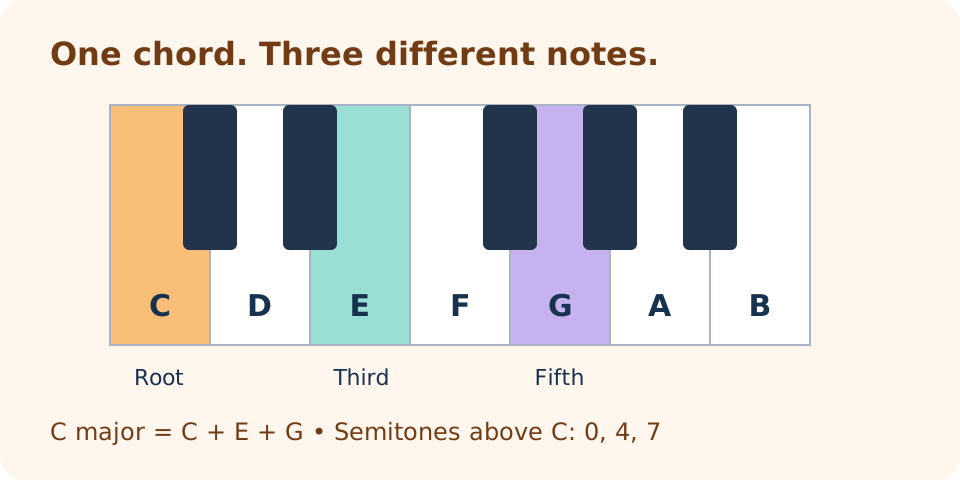
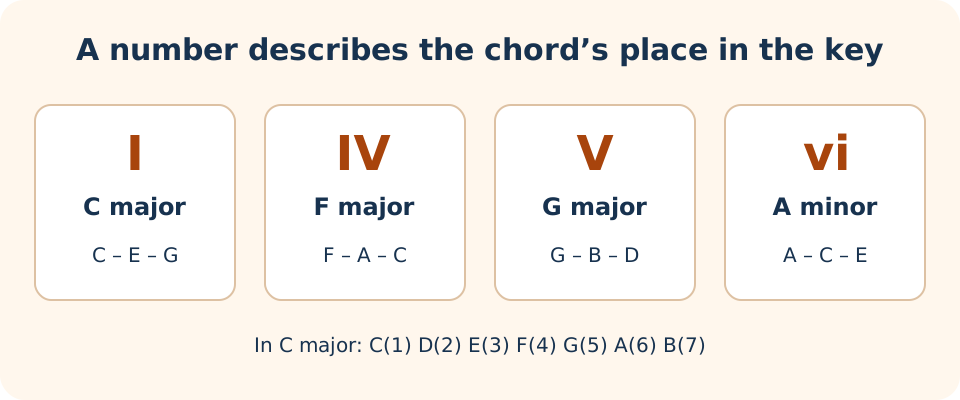
A chord combines notes. An inversion changes which of those notes is lowest. A Roman numeral names the chord by its place in a key. None of these concepts requires you to know the others already: begin with a C major chord, then follow the examples in order.
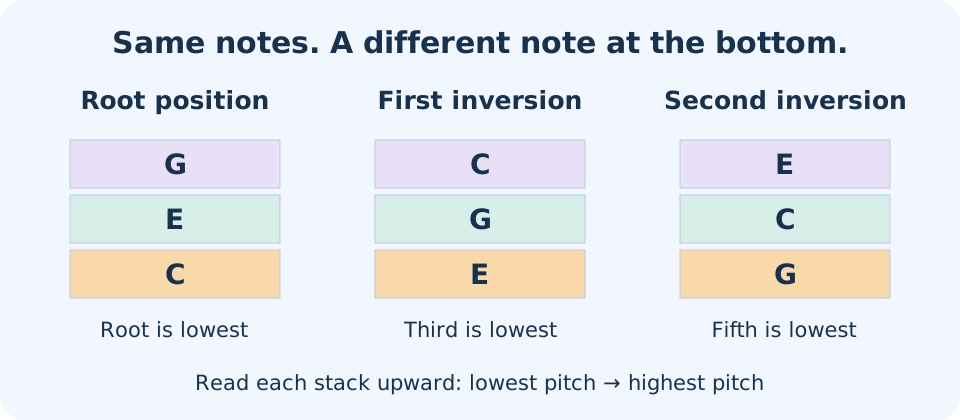
These are all C major. The note at the bottom gives each position its name.The numerals stay useful when you change keys. The chord names change with the key.
Try it, then come back
You do not need to memorize the whole guide. Practice one concept, listen, and return to an example when you get stuck.