A more resonant violin sound
Good tone is a balance of motion and contact, not constant extra force.
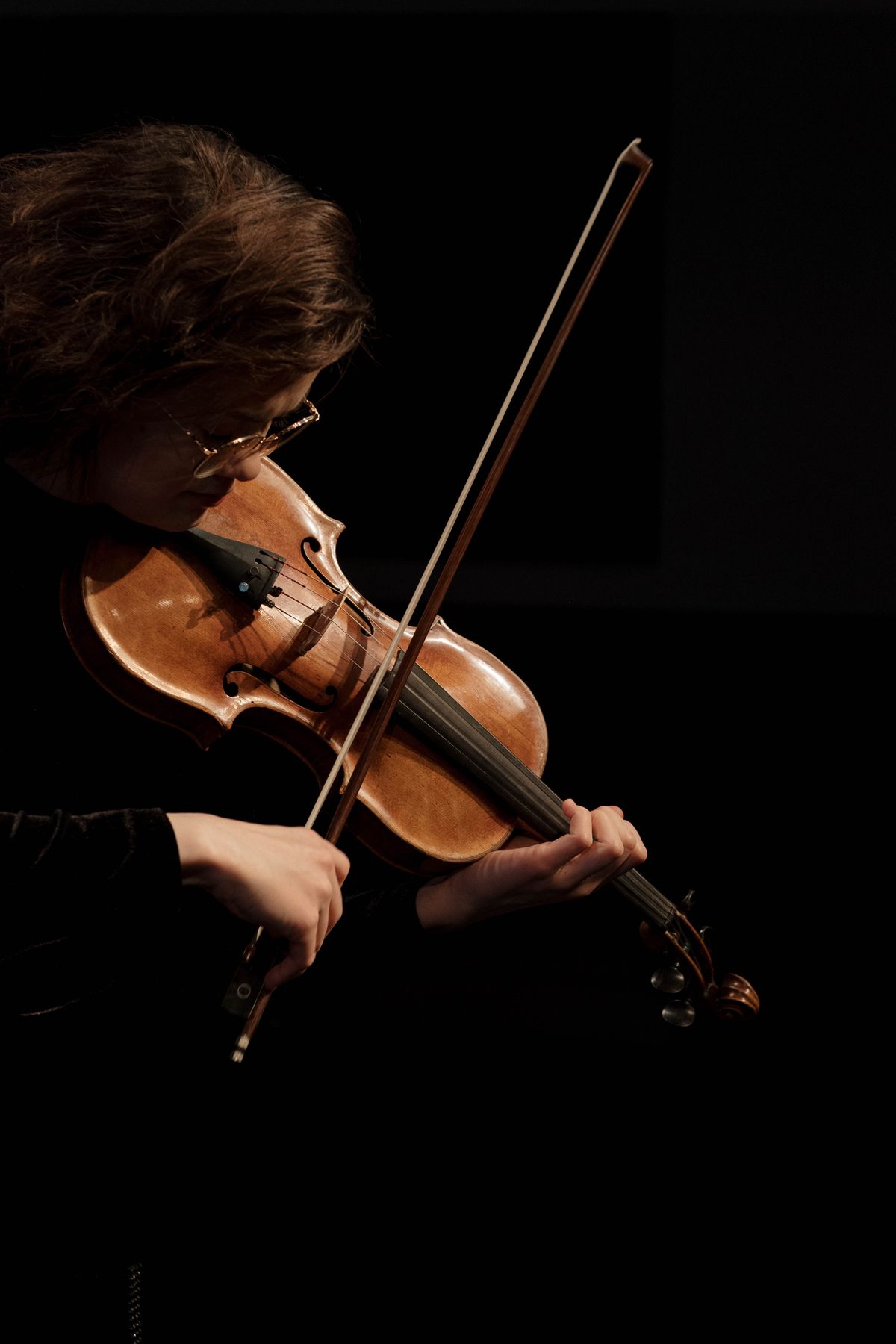
Violin sound changes with bow speed, contact point, weight, and the way the instrument is supported. Small deliberate experiments help you hear which part of the setup is changing the result.
A better sound rarely comes from changing every part of your playing at once. Begin with an easy note and a reliable setup, listen carefully, and try one small adjustment. You are looking for a repeatable improvement rather than one impressive note that takes extra effort.
This guide focuses on a more resonant violin sound. Work through the checks in order and bring persistent problems to a teacher who plays violin. Adapt the routine to your instrument model and your teacher's instructions.
Comfortable setup
Have your teacher fit the chinrest and shoulder support. Keep the instrument supported without clamping the neck between shoulder and jaw.
Listen to the string
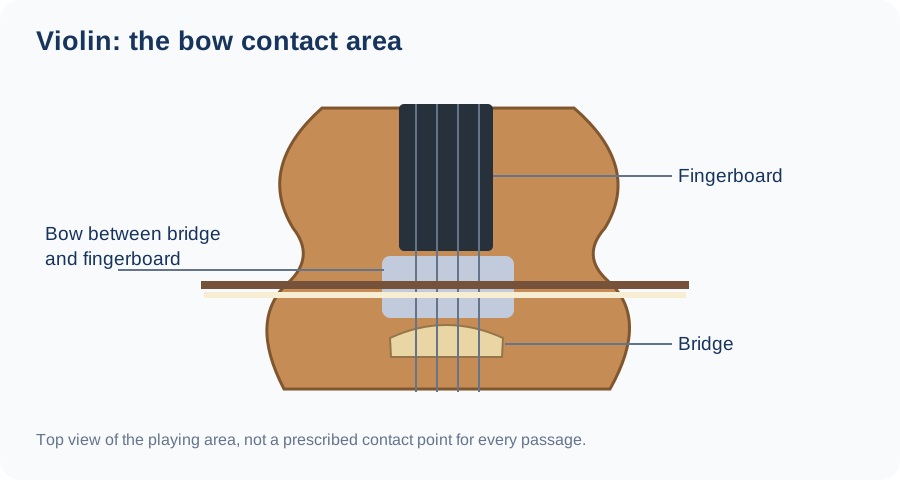
Use an open string to explore bow speed, weight, and contact point. Keep the bow traveling consistently rather than adding pressure whenever the sound thins.
Try this short study
Play four slow open-string bows, listening for a steady sound all the way through. Then cross to a neighboring string without raising the shoulder.
Compare one open string
Play two slow bows on the same violin open string at the same dynamic. Keep the contact point consistent and change only bow speed or weight between attempts. Listen for an even sound through the stroke, then rest before repeating. Avoid squeezing the neck to stabilize a difficult bow stroke.
Add a neighboring string
Once the open-string sound is consistent, make a slow crossing to the adjacent string. Let the arm adjust without raising the shoulder abruptly. Listen for the beginning of the new string and return to separate strokes if it scratches or whistles. Ask your teacher to check the bow path.
Your next practice
Choose one comfortable task, change one variable, and keep the sound improvement you can repeat without extra strain.
Sources & further reading
These manufacturer and educational references support the underlying care or playing principles. The short practice exercises are OpenScores suggestions; the sources do not review or endorse this article.
Was this article helpful?
Report something confusing
No personal details needed. Log in to submit; your feedback goes to the OpenScores admin panel.