Why does my clarinet squeak?
Check simple causes before blaming your playing.

On a clarinet, the reed, mouthpiece, fingers, and air all contribute to response. B-flat, A, and bass clarinets share important principles, but their cleaning tools and support arrangements are not interchangeable.
When something does not work, repeating it faster often makes the cause harder to hear. Separate the problem into a short, repeatable task. Check the instrument and setup, choose one movement to observe, and compare the result before moving on.
This guide focuses on why does my clarinet squeak?. Work through the checks in order and bring persistent problems to a teacher who plays clarinets. Adapt the routine to your instrument model and your teacher's instructions.
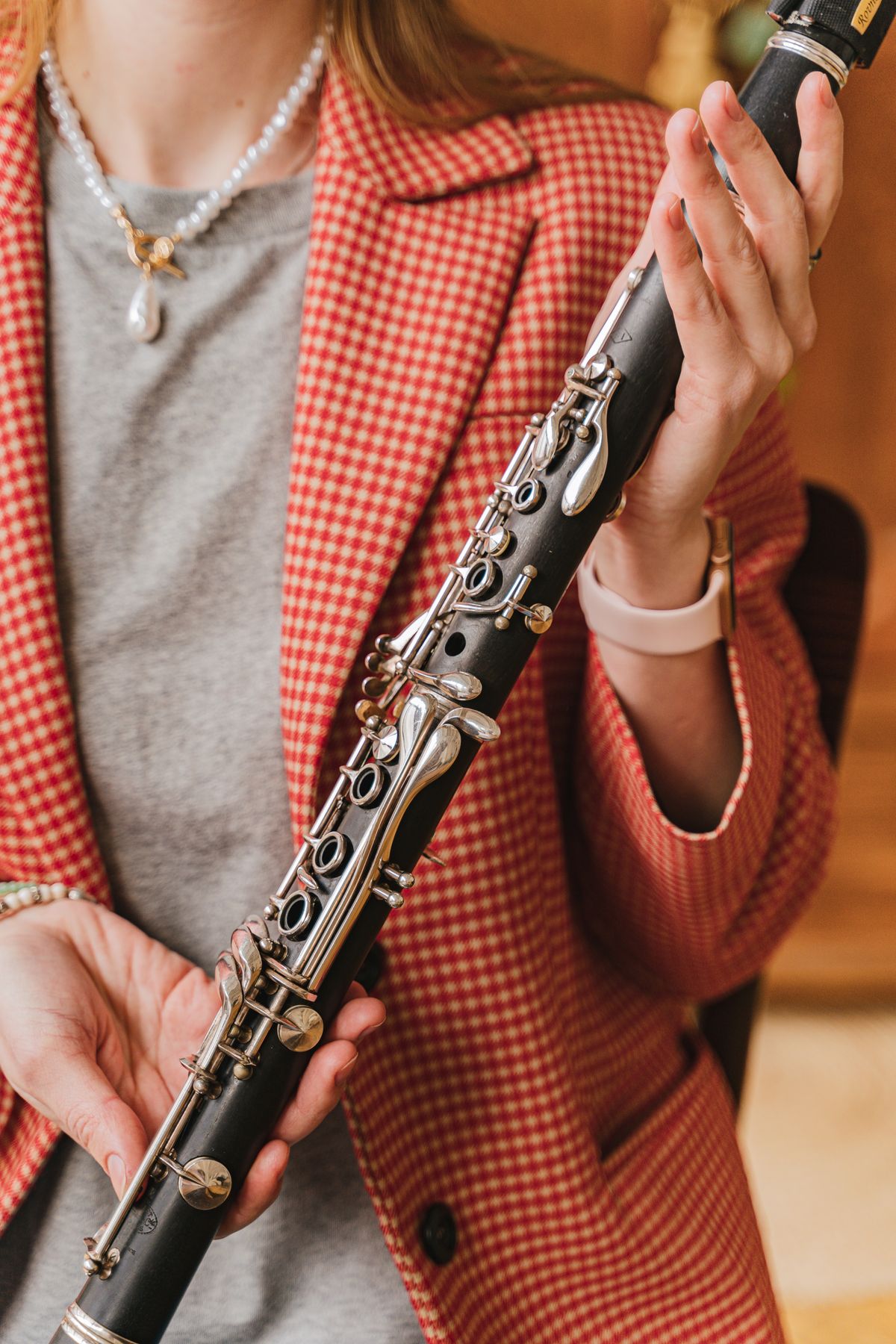
Find the trigger
Try a fresh, correctly placed reed. Check for a chipped tip, fingers missing tone holes, or an unstable mouthpiece position. A squeak on the same note every time may need a teacher’s inspection.
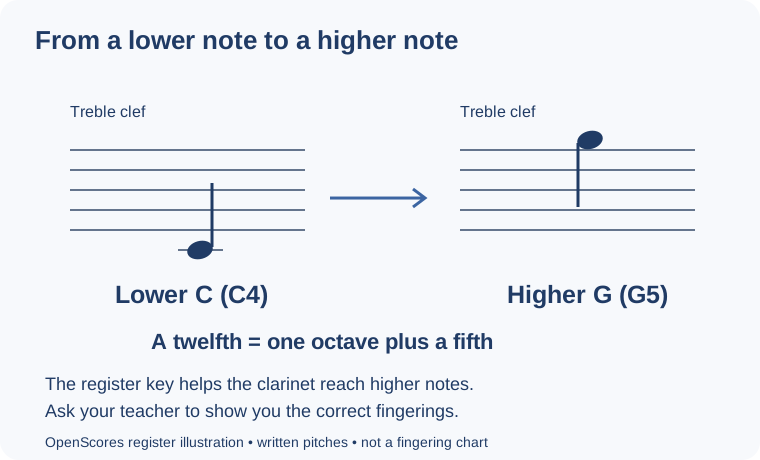
Cross the break slowly
A register is a group of lower or higher notes. The register key helps your clarinet play in its higher range. Unlike an octave jump from C to the next C, the example here goes from lower C to a G above that next C. Musicians call this distance a twelfth: one octave plus a fifth. C4 and G5 are labels for the written notes shown, not instructions for where to put your fingers. Ask your teacher to demonstrate the fingerings, then practice a few notes across the change slowly. Keep your fingers close and your air steady.
Bass clarinet differences
Use its support peg or strap correctly. Neck fit and register mechanisms differ from a small clarinet; follow your model’s manual instead of forcing a familiar assembly method.
Separate reed and fingers
Test a squeaking note with a known working reed, keeping the mouthpiece setup consistent. Next, check that every required tone hole is fully covered. Change one thing at a time; otherwise, a successful attempt will not tell you which change helped. Do not compensate for a recurring squeak by clamping the reed.
Practice the exact register connection
Choose a short passage across the clarinet break and slow it until the fingers and register key move together. Keep the air continuous and rest between repetitions. Note whether the trouble appears only during the transition or also when the higher note is played alone, then bring that example to your lesson.
Your next practice
Make the problem smaller, work slowly enough to observe it, and use what you notice to choose the next step.
Sources & further reading
These manufacturer and educational references support the underlying care or playing principles. The short practice exercises are OpenScores suggestions; the sources do not review or endorse this article.
Was this article helpful?
Report something confusing
No personal details needed. Log in to submit; your feedback goes to the OpenScores admin panel.