A clearer euphonium tone
Use a comfortable middle-register note and listen before adding pressure.
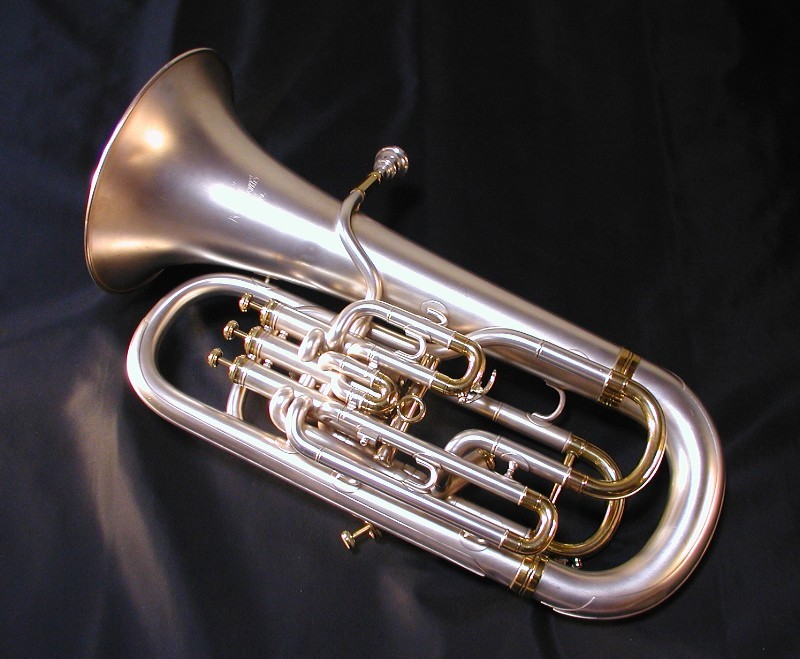
The euphonium combines a low-brass sound with valve coordination and substantial tubing. A comfortable supported position helps you work on response without using the mouthpiece to hold the instrument in place.
A better sound rarely comes from changing every part of your playing at once. Begin with an easy note and a reliable setup, listen carefully, and try one small adjustment. You are looking for a repeatable improvement rather than one impressive note that takes extra effort.
This guide focuses on a clearer euphonium tone. Work through the checks in order and bring persistent problems to a teacher who plays euphonium. Adapt the routine to your instrument model and your teacher's instructions.
Let support do the work
Sit or stand so the mouthpiece meets you naturally. Keep the instrument supported without hunching the shoulders or pressing it into your face.
Use a rounded air-supported sound
Play a comfortable note with steady air and a relaxed jaw. Start at moderate volume and keep the middle of the note stable.
A short warm-up
Alternate a comfortable long tone and a small lip slur. Rest between repetitions. Stop pushing when the response gets worse and return to an easier note.
Use support instead of pressure
Set the euphonium height so the mouthpiece meets your face without lifting the shoulders. Play an easy long tone at moderate volume and let your support carry the instrument. If response worsens as you continue, rest rather than pushing the mouthpiece harder into your lips.
Combine a long tone and a slur
Play a comfortable note, rest, then try a small assigned lip slur. Keep the same relaxed support and steady air. Listen for a centered arrival instead of maximum loudness. Return to the single note if the slur introduces strain and bring that interval to your teacher.
Your next practice
Choose one comfortable task, change one variable, and keep the sound improvement you can repeat without extra strain.
Sources & further reading
These manufacturer and educational references support the underlying care or playing principles. The short practice exercises are OpenScores suggestions; the sources do not review or endorse this article.
Was this article helpful?
Report something confusing
No personal details needed. Log in to submit; your feedback goes to the OpenScores admin panel.