Common euphonium playing problems
Work on one change at a time and check that the instrument is functioning.
The euphonium combines a low-brass sound with valve coordination and substantial tubing. A comfortable supported position helps you work on response without using the mouthpiece to hold the instrument in place.
When something does not work, repeating it faster often makes the cause harder to hear. Separate the problem into a short, repeatable task. Check the instrument and setup, choose one movement to observe, and compare the result before moving on.
This guide focuses on common euphonium playing problems. Work through the checks in order and bring persistent problems to a teacher who plays euphonium. Adapt the routine to your instrument model and your teacher's instructions.
Blurry articulation
Say a light syllable with moving air, then try four slow repeated notes. Keep the tongue motion small rather than interrupting every breath completely.
Valve coordination
Practice a difficult fingering pair slowly and keep fingertips near the valve buttons. A sticking piston needs lubrication or inspection, not harder pressing.
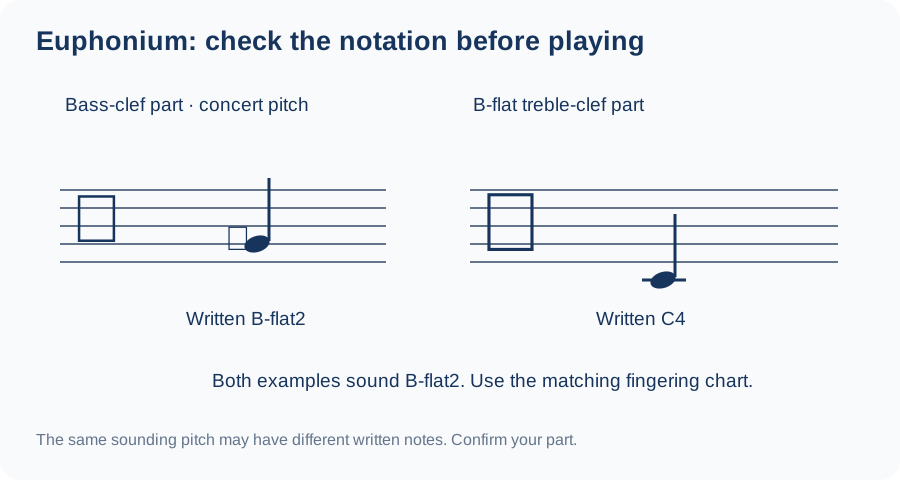
Check the part
Euphonium parts can use bass clef at concert pitch or B-flat treble clef. Confirm the notation before using fingering charts or transposition tools.
Test a valve pair slowly
Find the exact euphonium fingering pair that feels uneven. Alternate it at an easy tempo with fingertips near the buttons. Check whether a piston lags even when you move slowly. If it does, use the approved maintenance routine or arrange an inspection instead of pressing harder.
Confirm the notation first
Read the part’s clef and pitch convention before diagnosing wrong notes. Bass-clef concert-pitch euphonium parts and B-flat treble-clef parts use different written note names. Tell your teacher which notation you are using when asking about a fingering or tuner result.
Your next practice
Make the problem smaller, work slowly enough to observe it, and use what you notice to choose the next step.
Sources & further reading
These manufacturer and educational references support the underlying care or playing principles. The short practice exercises are OpenScores suggestions; the sources do not review or endorse this article.
Was this article helpful?
Report something confusing
No personal details needed. Log in to submit; your feedback goes to the OpenScores admin panel.