Daily care for your trombone
A daily routine is different from taking the instrument apart for a deep clean.

The trombone combines lip vibration with a moving slide. A freely responding instrument and deliberate slide movement make it easier to work on connected phrases and centered notes.
A good after-playing routine should be simple enough to repeat. The aim is to remove normal moisture or residue, protect vulnerable parts, and notice problems early. Keep scheduled servicing with a qualified technician, and limit home care to routine cleaning.
This guide focuses on daily care for your trombone. Work through the checks in order and bring persistent problems to a teacher who plays trombone. Adapt the routine to your instrument model and your teacher's instructions.
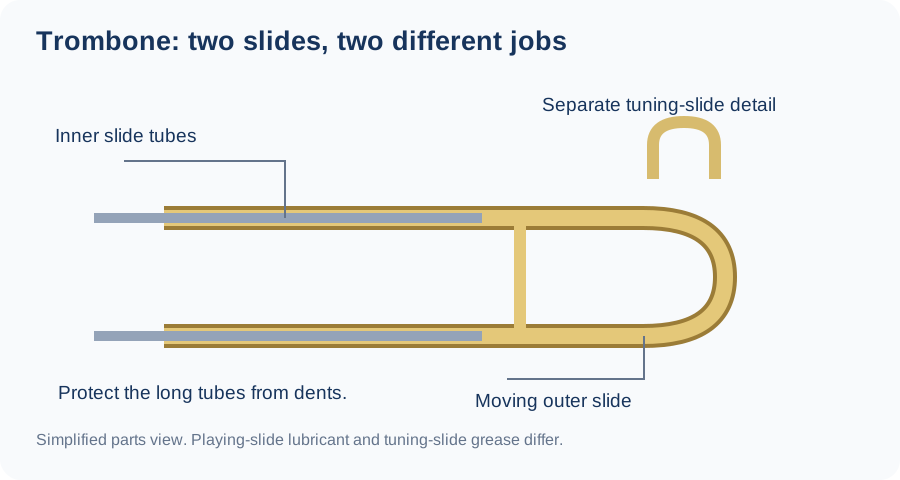
Prepare the playing slide
Use a trombone playing-slide lubricant, following its instructions. Do not put tuning-slide grease on the moving slide. Some creams require a water spray; other products do not.
After playing
Empty moisture and gently wipe the instrument. Lock the slide before handling or packing it and avoid bumps to the long tubes.
For equipped models
An F attachment or rotary valve needs its own lubricant and maintenance procedure. Follow the model’s manual and have a teacher demonstrate cleaning.
Protect the long slide tubes
Prepare the playing slide only with products intended for that moving slide. Hold the trombone securely during maintenance and keep the tubes clear of furniture or other instruments. The tuning slide uses a different routine. If movement remains rough, check with a technician rather than bending or polishing the slide yourself.
Check before leaving the case
Confirm that the slide lock works and the trombone rests in its fitted case without pressure. For an attachment model, follow the specified rotor-care procedure. A new scraping sound, dent, or dragging slide needs inspection before more forceful movement makes it worse.
Your next practice
Keep daily care gentle, use tools approved for your model, and leave uncertain adjustments to someone trained to make them.
Sources & further reading
These manufacturer and educational references support the underlying care or playing principles. The short practice exercises are OpenScores suggestions; the sources do not review or endorse this article.
Was this article helpful?
Report something confusing
No personal details needed. Log in to submit; your feedback goes to the OpenScores admin panel.