Daily care for your tuba
A daily routine is different from taking the instrument apart for a deep clean.
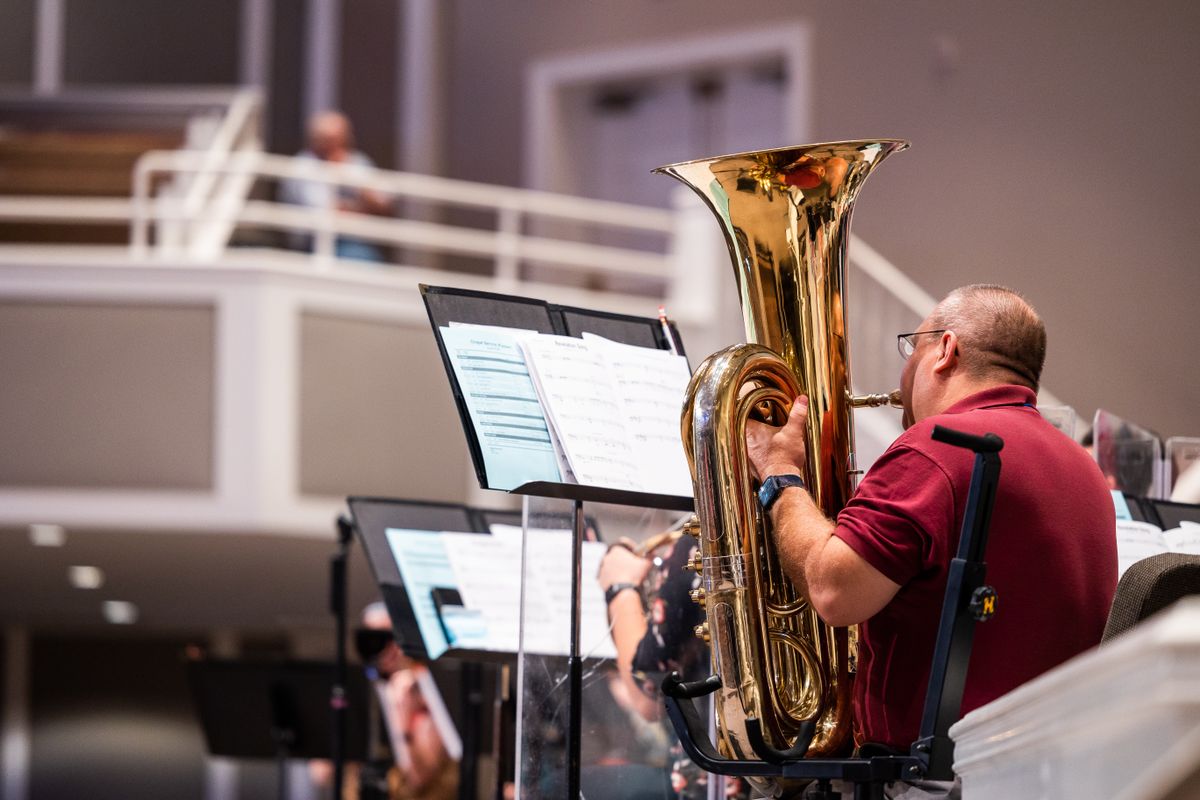
The tuba is a large instrument, but a useful sound study can begin with a small task. Support, a comfortable register, and an instrument that moves air freely are better starting points than trying to produce maximum volume.
A good after-playing routine should be simple enough to repeat. The aim is to remove normal moisture or residue, protect vulnerable parts, and notice problems early. Keep scheduled servicing with a qualified technician, and limit home care to routine cleaning.
This guide focuses on daily care for your tuba. Work through the checks in order and bring persistent problems to a teacher who plays tuba. Adapt the routine to your instrument model and your teacher's instructions.
Daily moisture care
Drain the instrument using its recommended water-key routine. Wipe the outside and store it securely so the bell and valves do not bear accidental weight.
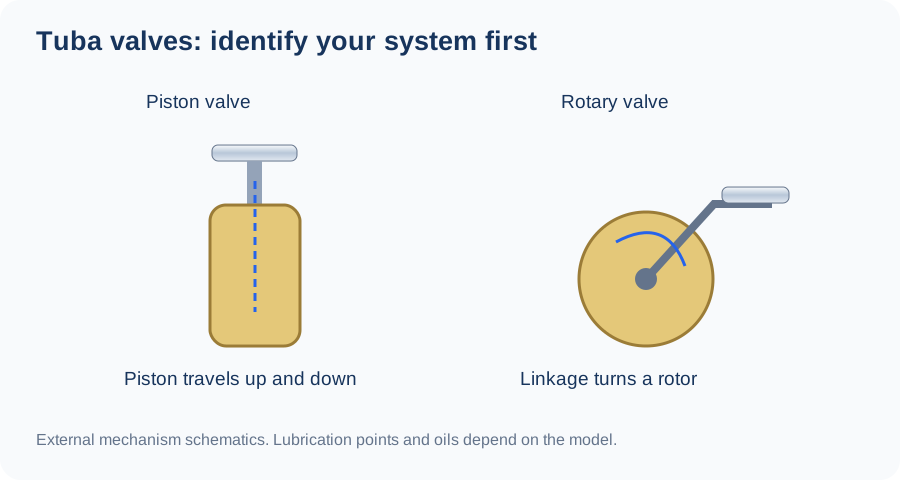
Match lubricant to the valve
Piston and rotary tubas use different procedures and oils. Follow your model’s manual; tuning-slide grease is not a universal substitute.
Cleaning the leadpipe
Use only a tuba-sized tool and a demonstrated procedure. Avoid pushing loose debris into the valve assembly, and leave deep cleaning to a supervised routine.
Identify the valve system
Check whether your tuba has pistons or rotary valves and use the model’s lubrication instructions. Keep valve oil and tuning-slide grease separate. Do not assume a trumpet oiling demonstration covers every tuba rotor or linkage. Have unfamiliar maintenance shown by a teacher or technician.
Store without loading the mechanism
Drain moisture using the demonstrated procedure and wipe the outside gently. Place the tuba securely in its case or approved support, keeping accidental pressure off valves and tubing. Do not lift by fragile linkage or force a stuck slide. Report a sudden change in valve travel before continuing.
Your next practice
Keep daily care gentle, use tools approved for your model, and leave uncertain adjustments to someone trained to make them.
Sources & further reading
These manufacturer and educational references support the underlying care or playing principles. The short practice exercises are OpenScores suggestions; the sources do not review or endorse this article.
Was this article helpful?
Report something confusing
No personal details needed. Log in to submit; your feedback goes to the OpenScores admin panel.