A more resonant double bass sound
Good tone is a balance of motion and contact, not constant extra force.

Double bass playing may involve a bow, pizzicato, or both. Because its size and setup vary, start with a position that lets you reach naturally and support the instrument securely.
A better sound rarely comes from changing every part of your playing at once. Begin with an easy note and a reliable setup, listen carefully, and try one small adjustment. You are looking for a repeatable improvement rather than one impressive note that takes extra effort.
This guide focuses on a more resonant double bass sound. Work through the checks in order and bring persistent problems to a teacher who plays double bass. Adapt the routine to your instrument model and your teacher's instructions.
Comfortable setup
Choose a sitting or standing setup with your teacher. Adjust the endpin so you can reach naturally, and secure the instrument between passages.
Listen to the string
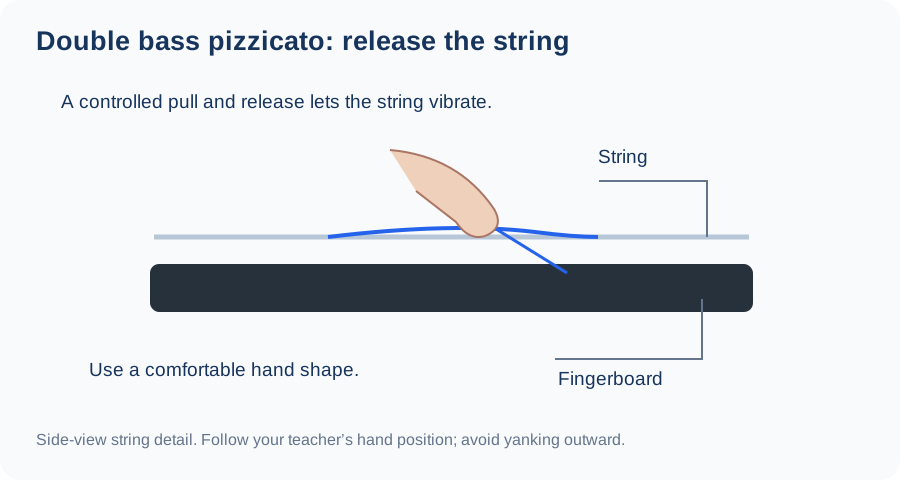
For bowed playing, use a controlled contact point and enough bow motion for the string to respond. For pizzicato, release the string rather than yanking it away from the fingerboard.
Try this short study
Try a slow open-string pattern, first bowed if you use a bow, then plucked. Keep the pulse and compare the start and decay of each sound.
Compare bowed and plucked response separately
Choose one comfortable double-bass open string. For arco, listen to a slow stroke with a controlled contact point; for pizzicato, listen to the release and decay after the pluck. Work on the technique your passage requires instead of judging both by the same sound or volume expectation.
Keep the support unchanged
Repeat a short open-string pattern using the same sitting or standing setup. Let the instrument stay secure while your playing hand moves. Record a brief attempt and listen for an even start and decay. If you need to squeeze or reach to stabilize it, ask your teacher to check the endpin height.
Your next practice
Choose one comfortable task, change one variable, and keep the sound improvement you can repeat without extra strain.
Sources & further reading
These manufacturer and educational references support the underlying care or playing principles. The short practice exercises are OpenScores suggestions; the sources do not review or endorse this article.
Was this article helpful?
Report something confusing
No personal details needed. Log in to submit; your feedback goes to the OpenScores admin panel.