Your after-playing flute routine
A few gentle steps keep moisture from sitting inside the flute.
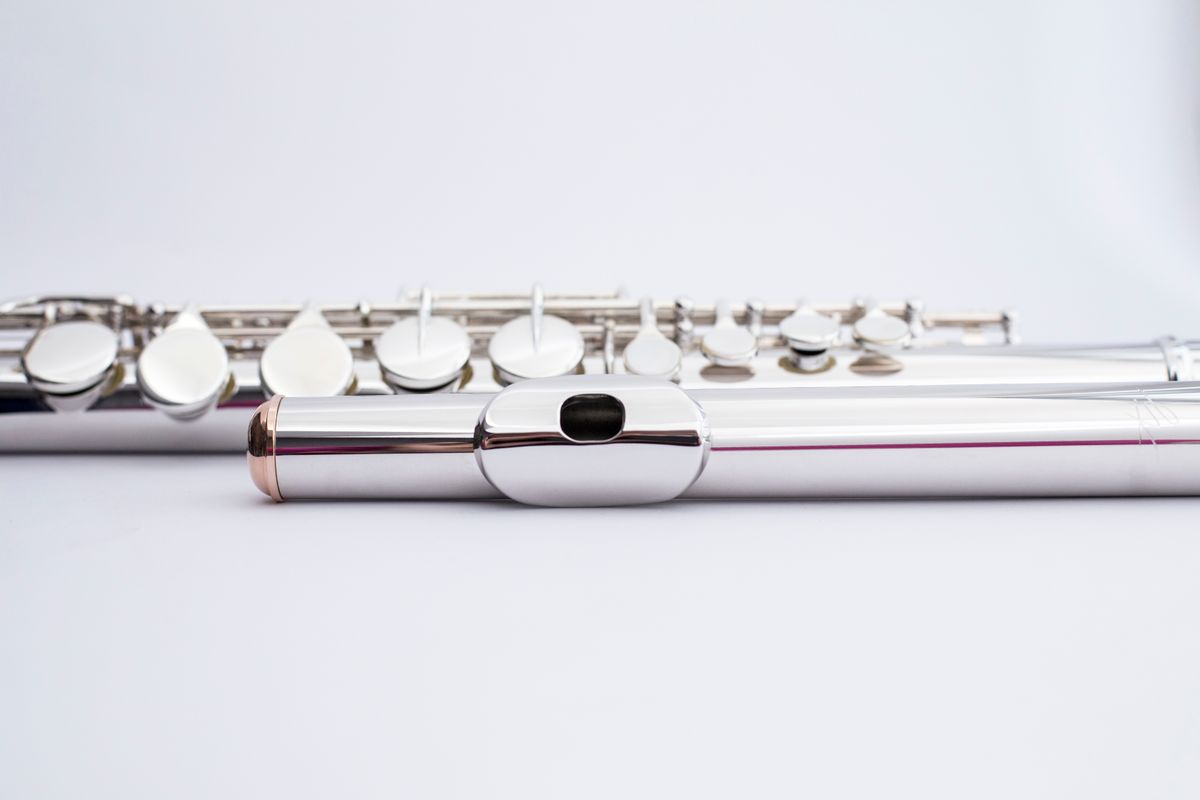
The flute turns a directed stream of air into vibration at the embouchure hole. That makes small changes in air direction noticeable, while its many linked keys make gentle handling especially important.
A good after-playing routine should be simple enough to repeat. The aim is to remove normal moisture or residue, protect vulnerable parts, and notice problems early. Keep scheduled servicing with a qualified technician, and limit home care to routine cleaning.
This guide focuses on your after-playing flute routine. Work through the checks in order and bring persistent problems to a teacher who plays flute. Adapt the routine to your instrument model and your teacher's instructions.
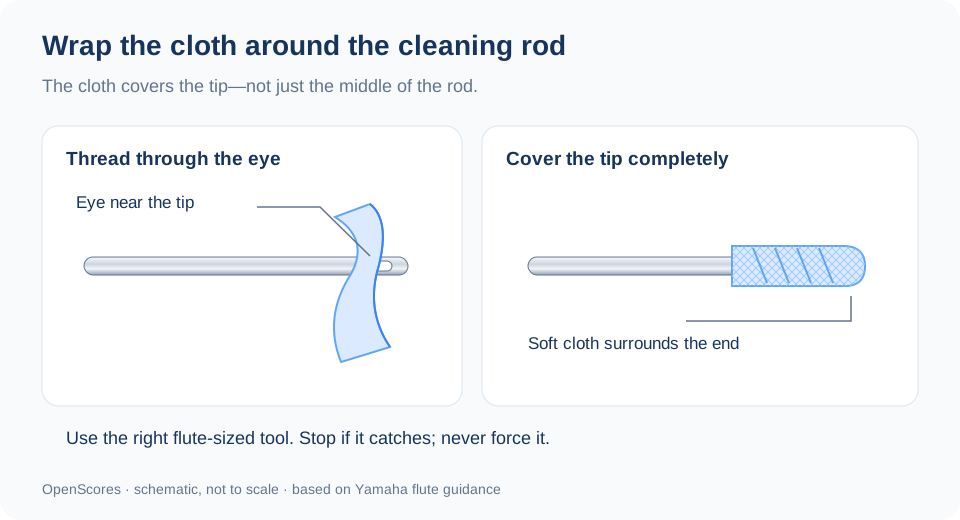
Dry the inside
Separate the joints while holding the plain tubing, not the keys. Use a flute-sized cleaning rod and soft cloth; cover the rod tip completely. Follow the cleaning direction in your instrument manual.
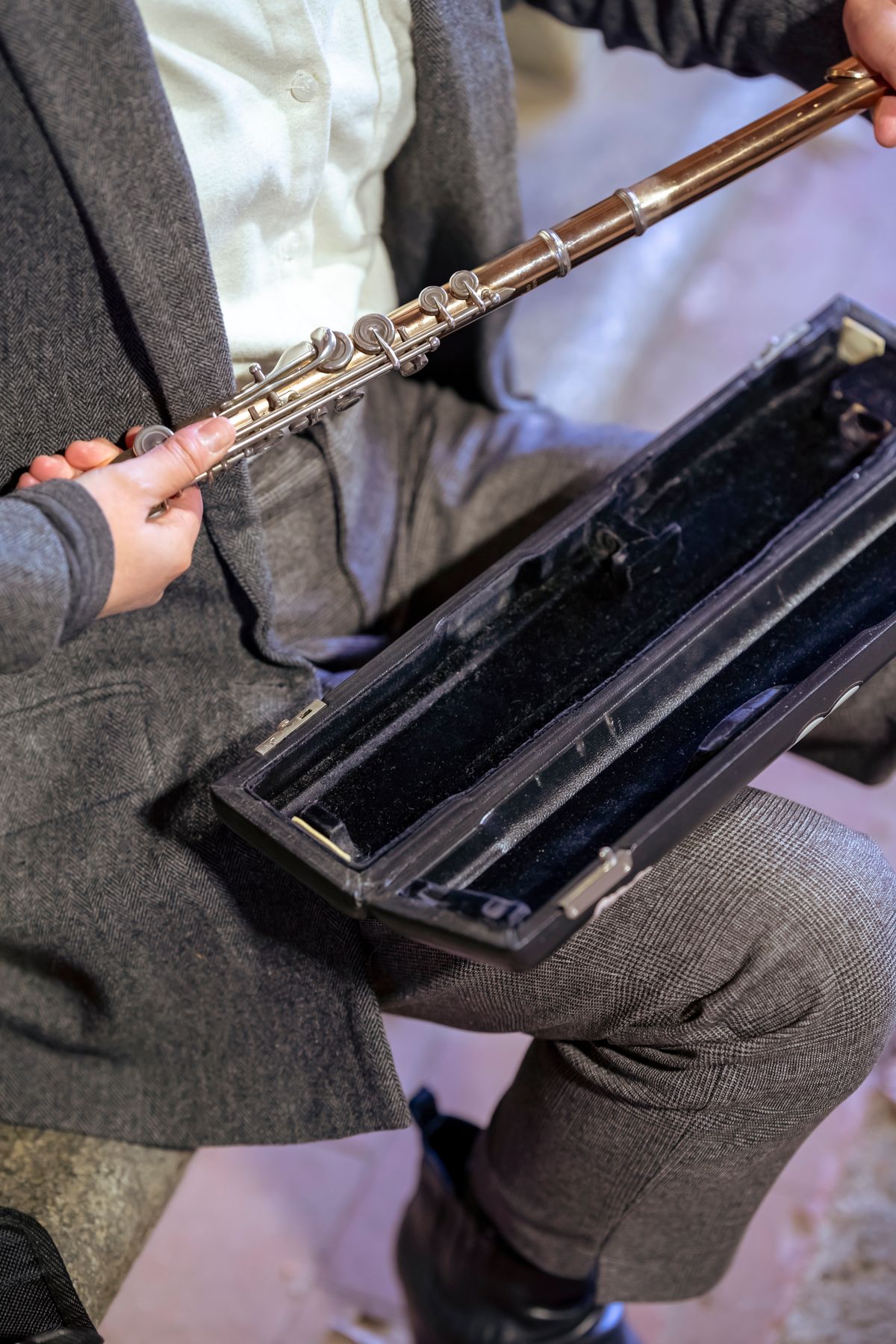
Wipe and pack
Lightly wipe fingerprints with a clean cloth without pressing the keywork. Put each joint in its fitted case position. Keep the damp cleaning cloth outside the instrument compartment.
If something sticks
Do not bend keys or turn adjustment screws. Ask a teacher to demonstrate pad-cleaning paper, and arrange service for a persistent leak or sticky key.
Prepare a safe cleaning setup
Open the case on a stable surface and set out a flute cleaning rod and a clean cloth. Cover the rod tip completely so it cannot scratch the bore. Keep the cloth clear of the key mechanism when handling the separated joints. If you are unsure how to grip a joint, ask your teacher to demonstrate before cleaning.
Check before assembling again
Look for loose or sticking keys and check that the joints fit normally. Do not force a tight connection or rotate the headjoint while gripping its keys. A note that repeatedly fails despite covered keys may indicate a pad leak; keep the flute protected and arrange an inspection.
Your next practice
Keep daily care gentle, use tools approved for your model, and leave uncertain adjustments to someone trained to make them.
Sources & further reading
These manufacturer and educational references support the underlying care or playing principles. The short practice exercises are OpenScores suggestions; the sources do not review or endorse this article.
Was this article helpful?
Report something confusing
No personal details needed. Log in to submit; your feedback goes to the OpenScores admin panel.