Airy notes and uneven finger changes
An unclear note can come from your air, a finger opening, or a leaking pad.
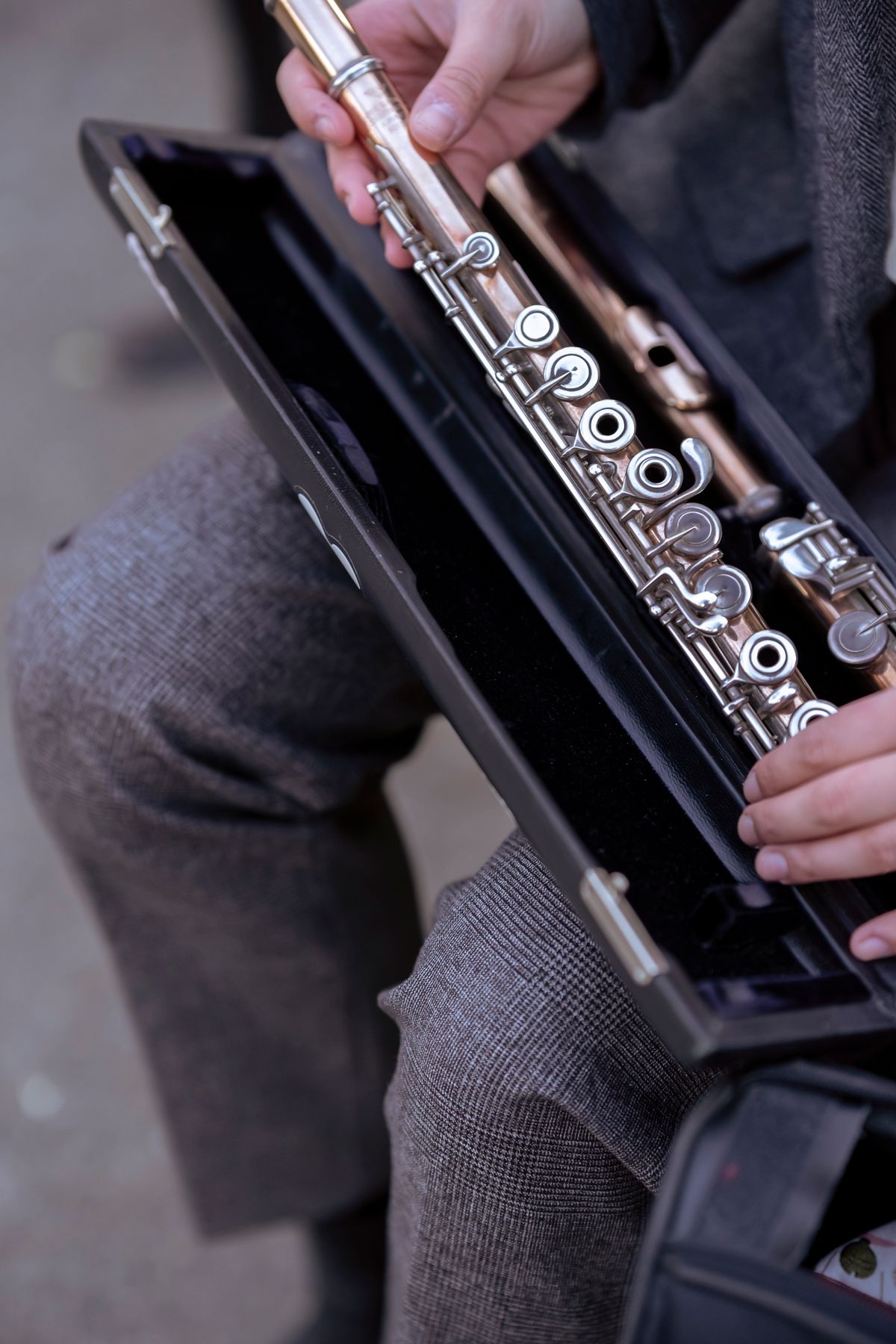
The flute turns a directed stream of air into vibration at the embouchure hole. That makes small changes in air direction noticeable, while its many linked keys make gentle handling especially important.
When something does not work, repeating it faster often makes the cause harder to hear. Separate the problem into a short, repeatable task. Check the instrument and setup, choose one movement to observe, and compare the result before moving on.
This guide focuses on airy notes and uneven finger changes. Work through the checks in order and bring persistent problems to a teacher who plays flute. Adapt the routine to your instrument model and your teacher's instructions.
Check the basics
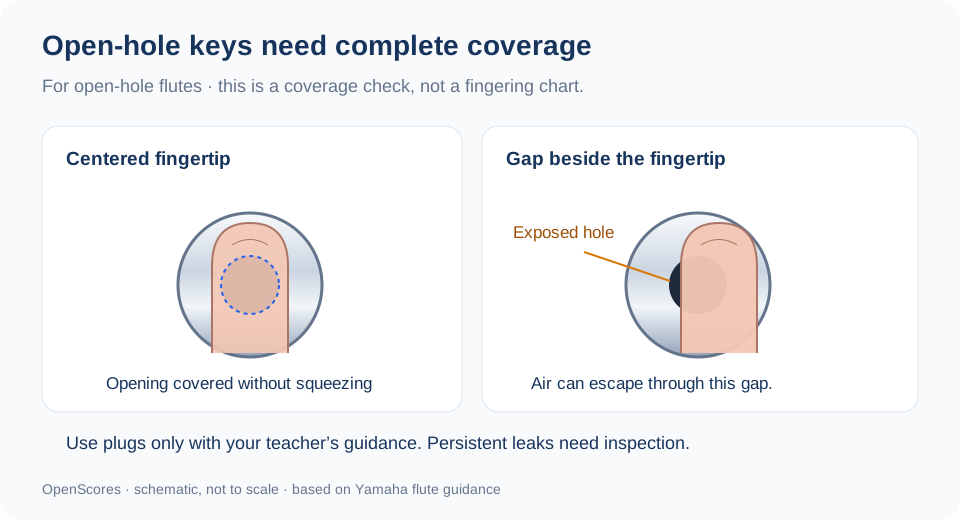
Confirm the joints are aligned and your fingers close the intended keys. On an open-hole flute, use your teacher’s advice about hole plugs while learning.
Slow the transition
Alternate two neighboring notes as half notes at a slow tempo. Keep fingers near their keys and listen for a clean connection, then try the same pair tongued.
Separate player and instrument
If an easy note repeatedly fails despite a comfortable setup, have your teacher try the instrument or inspect it. Do not compensate for a leak by squeezing harder.
Locate the noisy transition
Choose the exact pair of flute notes that produces an unwanted sound. Play each separately, then alternate them slowly. Watch for a finger lifting too far or failing to close an open hole. Keep the same air direction so the finger change is the only variable.
Bring a specific example
Write down the two written notes and whether the problem occurs while slurring, tonguing, or both. If one note still fails when played alone, show your teacher rather than squeezing the keys harder. This makes it easier to decide whether to work on finger coordination or have the flute checked.
Your next practice
Make the problem smaller, work slowly enough to observe it, and use what you notice to choose the next step.
Sources & further reading
These manufacturer and educational references support the underlying care or playing principles. The short practice exercises are OpenScores suggestions; the sources do not review or endorse this article.
Was this article helpful?
Report something confusing
No personal details needed. Log in to submit; your feedback goes to the OpenScores admin panel.