Finding a clearer flute tone
Start in a comfortable register and change one thing at a time.
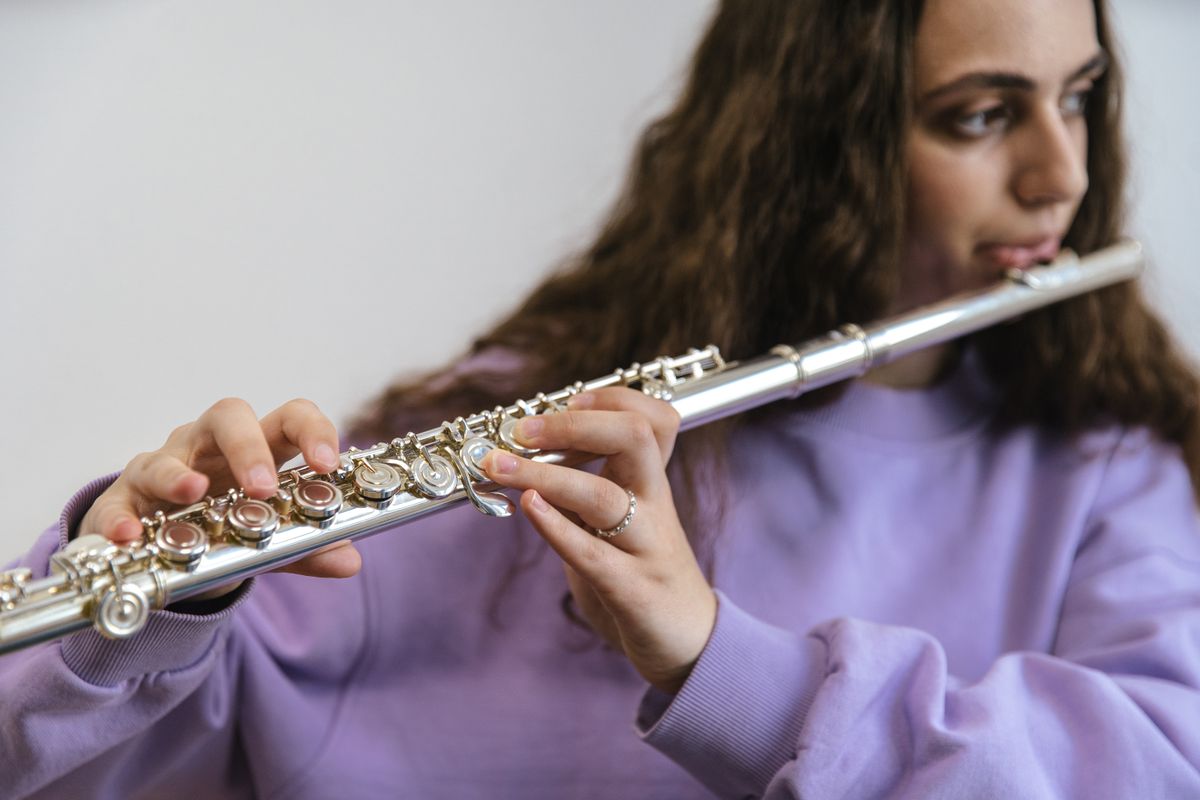
The flute turns a directed stream of air into vibration at the embouchure hole. That makes small changes in air direction noticeable, while its many linked keys make gentle handling especially important.
A better sound rarely comes from changing every part of your playing at once. Begin with an easy note and a reliable setup, listen carefully, and try one small adjustment. You are looking for a repeatable improvement rather than one impressive note that takes extra effort.
This guide focuses on finding a clearer flute tone. Work through the checks in order and bring persistent problems to a teacher who plays flute. Adapt the routine to your instrument model and your teacher's instructions.
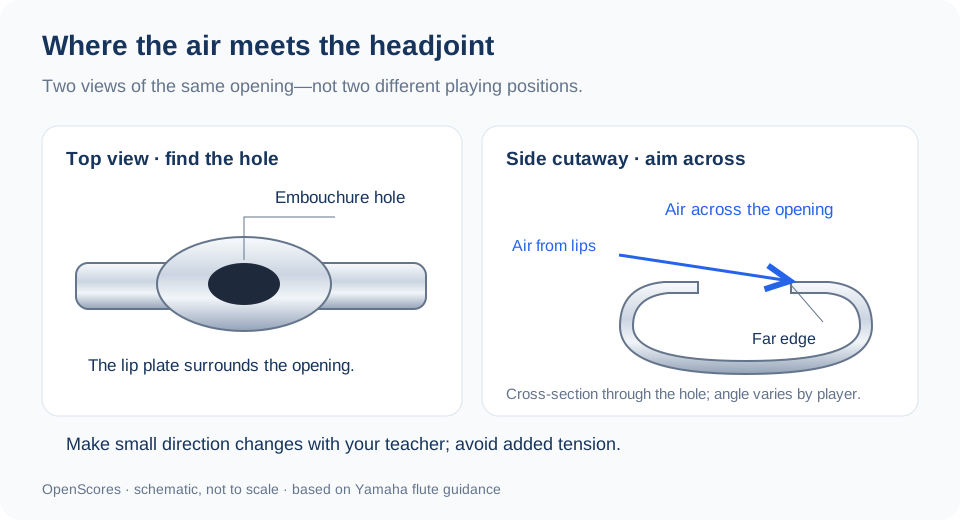
Focus the air
Keep your shoulders relaxed. Make a small, comfortable opening in the lips and direct a steady stream across the embouchure hole. Small angle changes are more useful than simply blowing harder.
Try a headjoint check
With a teacher’s setup guidance, play a few easy sounds on the headjoint. Find the position that gives a clear center, then keep that feeling when you assemble the flute.
A two-minute experiment
Hold one comfortable note for four counts, rest four, and repeat. Try a tiny change in air direction. Keep the version that sounds clearer without adding tension.
Compare two air directions
Use the same comfortable note, dynamic, and flute position for two short attempts. Make only a small change in the direction of the air across the embouchure hole. Listen for a clearer center rather than extra loudness. Rest before repeating and keep your shoulders relaxed.
Carry the sound into a phrase
Connect your chosen note to one nearby note at a slow tempo. Keep the air moving while the fingers change. If the second note becomes airy, return to separate long notes and compare their response before trying the connection again. Ask your teacher to listen to the headjoint position if the problem persists.
Your next practice
Choose one comfortable task, change one variable, and keep the sound improvement you can repeat without extra strain.
Sources & further reading
These manufacturer and educational references support the underlying care or playing principles. The short practice exercises are OpenScores suggestions; the sources do not review or endorse this article.
Was this article helpful?
Report something confusing
No personal details needed. Log in to submit; your feedback goes to the OpenScores admin panel.